Engineer
Sets intent
Defines goals, policies, permissions, and when human review is required.
Product
Doku is building the coordination layer for infrastructure agents. It gives agents one shared view of state and dependencies across AWS, Google Cloud, Azure, and private systems, so they can plan, test, execute, and verify changes together.
Talk to the founders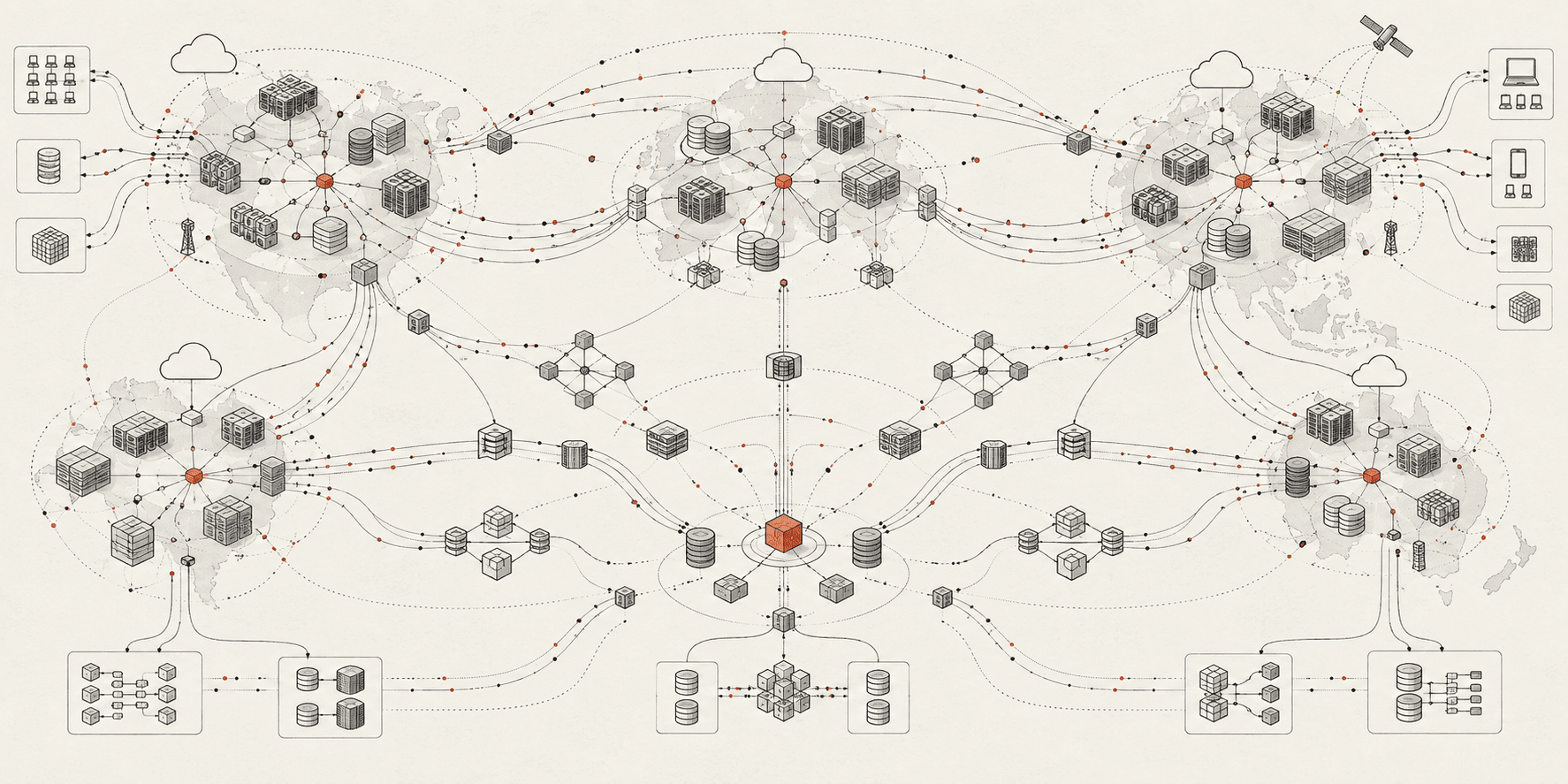
Every service, dependency, policy, action, and result becomes part of the same machine-readable system.
Agent workforce
Infrastructure work becomes parallel without becoming fragmented.
Specialized agents can manage services, clusters, capacity, deployments, security, and reliability at the same time. The graph gives each agent the context it needs while Doku coordinates changes, resolves dependencies, and preserves a complete operating history.
Keep infrastructure state and dependencies current across every environment.
Coordinate changes against the same graph instead of fragmented snapshots.
Test releases, failures, and rollback paths in disposable virtual environments.
Compare the resulting state with the intended outcome before moving forward.
Simulated environments
Test dozens or hundreds of possible releases without duplicating production.
Doku can use the infrastructure graph to model disposable development environments. Agents can explore deployment plans, dependency failures, capacity changes, and rollback paths without reserving a full copy of the underlying resources.
The goal is to rehearse a change to infrastructure worth tens or hundreds of millions for the cost of a cup of coffee.
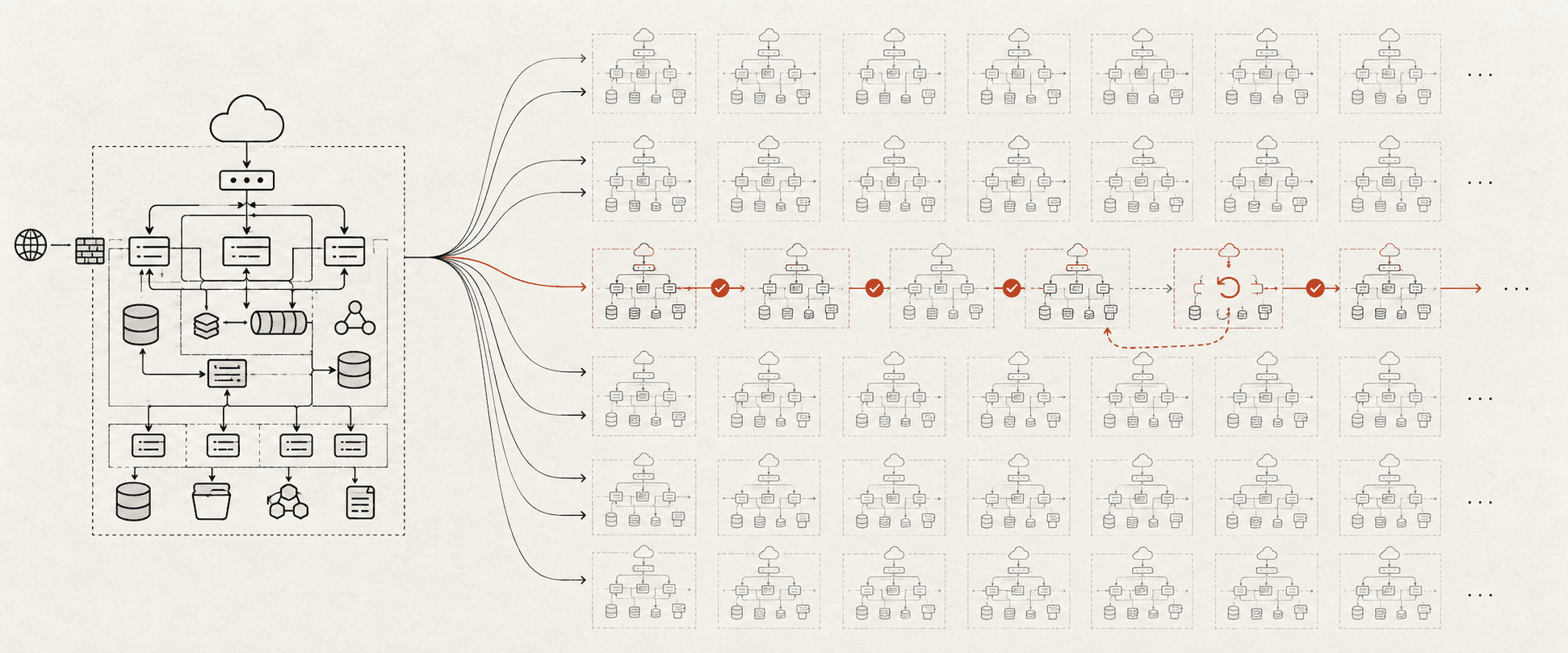
Explore alternative releases, verify outcomes, and discard the environment when the test is complete.
Human leverage
Infrastructure agents do not remove people from the system. They let one engineer supervise hundreds or thousands of parallel workers while keeping decisions, boundaries, and exceptions in human hands.
Engineer
Defines goals, policies, permissions, and when human review is required.
Agent fleet
Maps state, develops plans, runs simulations, executes changes, and checks results.
Doku
Provides shared context, coordination, controls, and a record of every action.
Start a conversation